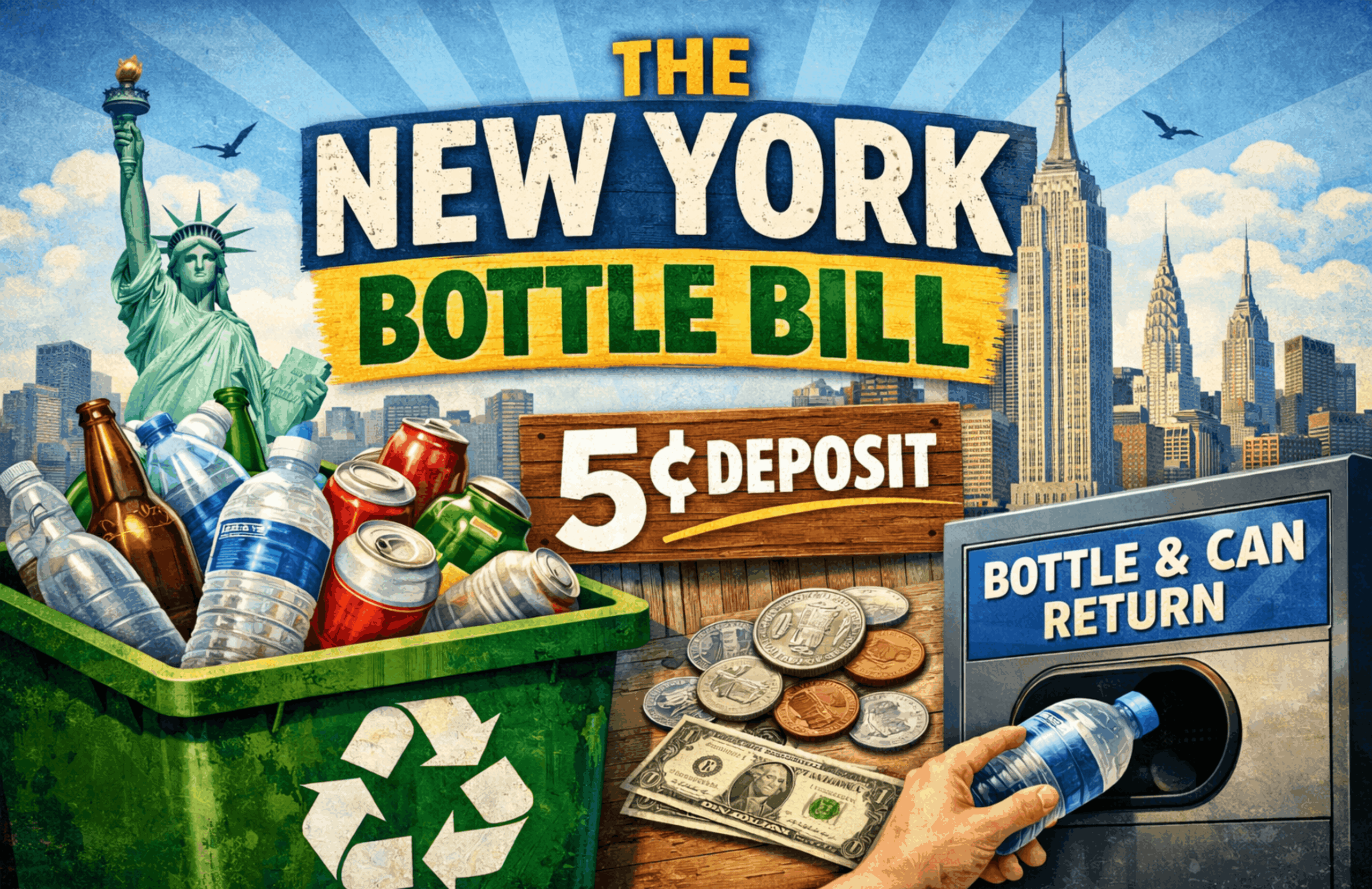
What is the New York Bottle Bill?
Officially, this law is named the New York State Returnable Container Act, but most residents, and we at our redemption centers, simply call it the Bottle Bill.
This 5 cent deposit system applies to any of the following materials marked as depositable in New York State:
- Glass (beer, soda, water, some misc carbonated beverages)
- Plastic (water, soda, energy drinks, most carbonated beverages)
- Aluminum (soda, beer, malt beverages, energy drinks, soda water)
A deposit typically applies to drinks like soda, beer, mineral water, and certain bottled waters, as long as the container is under one gallon. There are exceptions for what the bottle bill considers depositable such as iced teas, sports drinks, juice, milk and wine & liquor. These items carry no deposit and are called “non-deposit” returns in the redemption community.
In simple terms: The Bottle Bill dictates that when you buy certain beverages in New York, you pay a small extra charge of a five cent deposit that you can get back when you bring the empty container to a store or a redemption center like ours.
How Did The New York Bottle Bill Start?
The Bottle Bill was enacted in 1982 in response to growing concerns about litter, landfill overcrowding, and the environmental impact of beverage container waste. During the 1970s, roadside litter, especially bottles and cans, had become a highly visible problem across the state. In fact, some of the original motivation for what should be considered a depositable container was what was most commonly seen littered on the ground.
Beer and soda cans were among the most littered items and were therefore made depositable. The idea was simple but powerful: place a refundable deposit (five cents) on certain beverage containers so consumers would have a financial incentive to return them rather than throw them on the ground.
Environmental advocates, community groups, and lawmakers pushed for a system that would both reduce waste and encourage recycling. After significant debate between environmental groups, beverage distributors, and retailers, the law was passed and signed by Governor Hugh Carey. Supporters argued it would dramatically cut down litter and reduce the strain on municipal waste systems, while opponents raised concerns about costs and logistical burdens.
Ultimately, the environmental and public support for a deposit-return system prevailed. When the law took effect, it established a structured system for collection and redemption that has since become a model for other states and has been expanded over time to include additional beverage categories.
Why Are There Deposits on Drinking Containers?
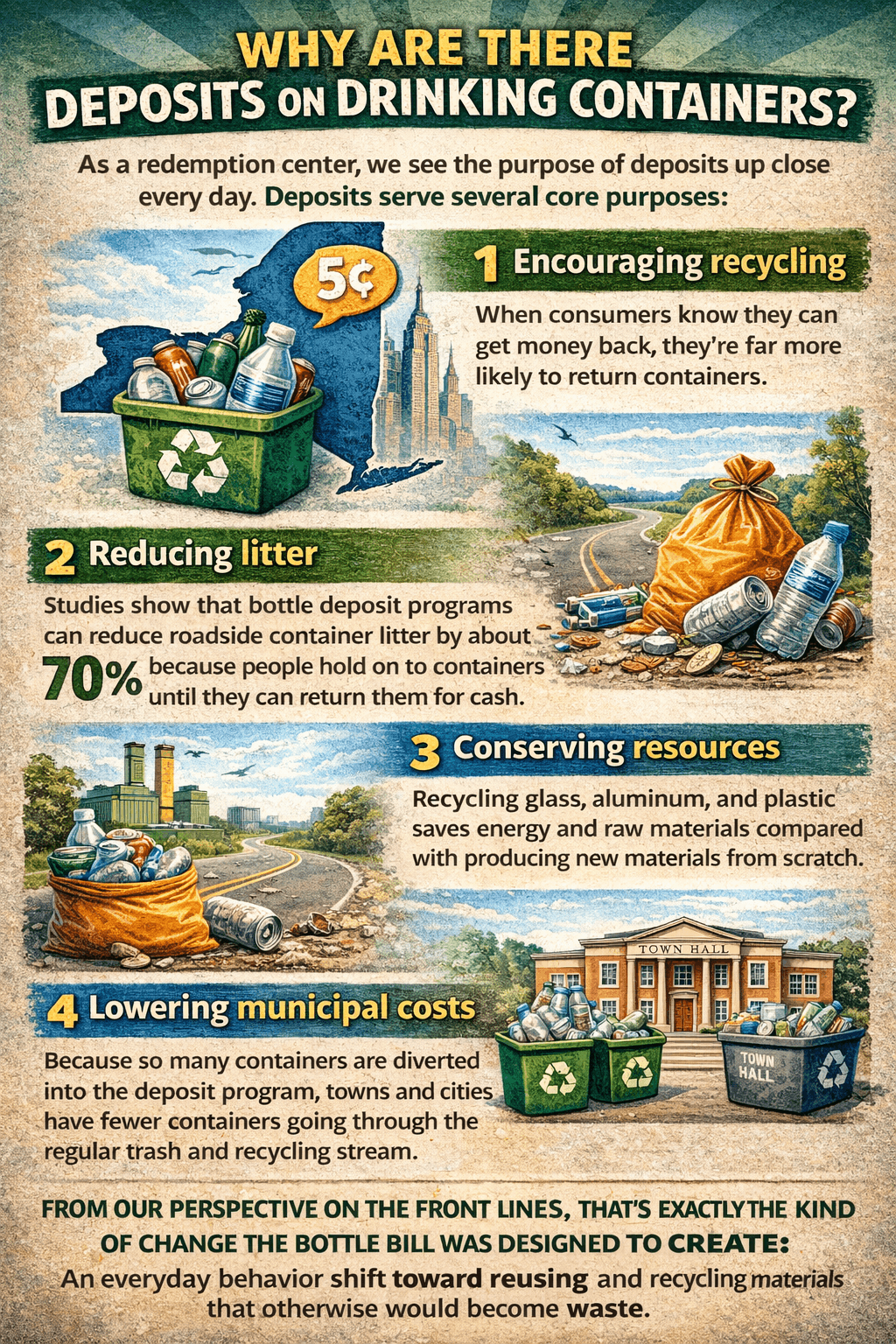
As a redemption center, we see the purpose of deposits up close every day. Deposits serve several core purposes:
- Encouraging recycling: When consumers know they can get money back, they’re far more likely to return containers.
- Reducing litter: Studies show that bottle deposit programs can reduce roadside container litter by about 70% because people hold on to containers until they can return them for cash.
- Conserving resources: Recycling glass, aluminum, and plastic saves energy and raw materials compared with producing new materials from scratch.
- Lowering municipal costs: Because so many containers are diverted into the deposit program, towns and cities have fewer containers going through the regular trash and recycling stream.
From our perspective on the front lines, that’s exactly the kind of change the Bottle Bill was designed to create. An everyday behavior shift toward reusing and recycling materials that otherwise would become waste.
Why Don’t All Containers Have Deposits?
An obvious common question is why aren’t all bottles and cans included in the bottle bill? Why do deposits apply to soda and beer, but not to things like juice boxes, milk cartons, or sports drinks?
As discussed earlier, when the Bottle Bill was written and passed in 1982, it was with a specific set of containers in mind. Originally, the issue was what was being seen on the side of the road. The idea was that if we incentivized those containers to be recycled it would clean up the side of the road.
Over time, however, the beverage market has changed dramatically. Today, people drink from a much wider range of packaging formats and not all of them are covered under the current law.
For example:
- Milk and dairy products are exempt.
- Non-carbonated juices and sports drinks aren’t currently part of the program.
Liquor, spirits, and hard cider containers also don’t carry a deposit.
There are practical reasons for this:
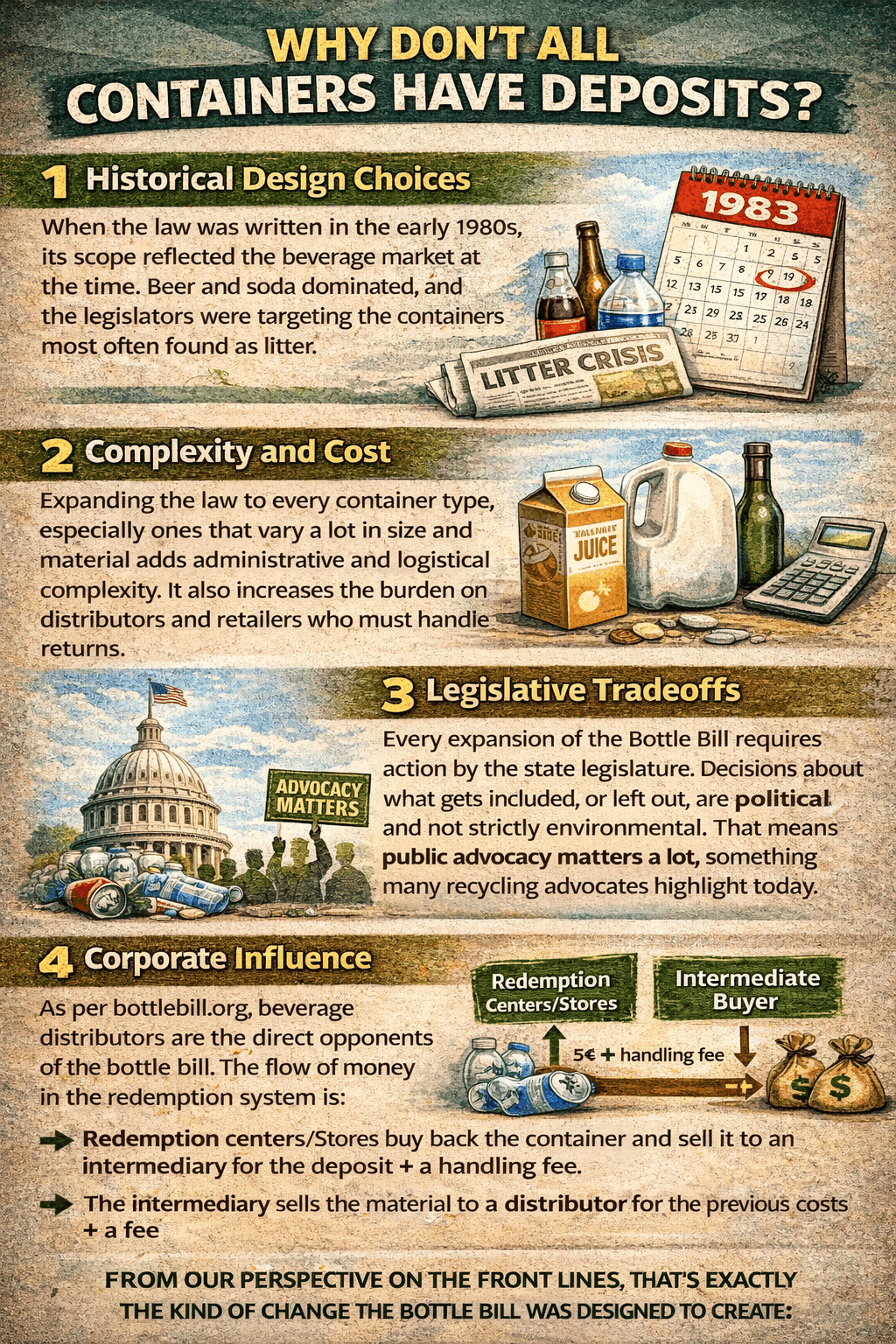
1. Historical Design Choices
When the law was written in the early 1980s, its scope reflected the beverage market at the time. Beer and soda dominated, and the legislators were targeting the containers most often found as litter.
2. Complexity and Cost
Expanding the law to every container type, especially ones that vary a lot in size and material adds administrative and logistical complexity. It also increases the burden on distributors and retailers who must handle returns.
3. Legislative Tradeoffs
Every expansion of the Bottle Bill requires action by the state legislature. Decisions about what gets included, or left out, are political and not strictly environmental. That means public advocacy matters a lot, something many recycling advocates highlight today.
4. Corporate Influence
As per bottlebill.org, beverage distributors are the direct opponents of the bottle bill. The flow of money in the redemption system is:
- Redemption centers/Stores buy back the container and sell it to an intermediary for the deposit + a handling fee.
- The intermediary sells the material to a distributor for the previous costs + a fee
Increasing the deposit and increasing the handling fee ultimately drives the price of purchasing raw material up for the distributors at the end of the line. Thus, they oppose it. The current system is still cheaper than mining the raw materials for distributors. However, they still do not wish to see their costs rise more.
How Successful the Bottle Bill Has Been
From the vantage point of a redemption center, the success of the Bottle Bill is very real, and the numbers back that up.
High Redemption Rates
Across the decades, New York’s beverage container return rate has averaged around 65–75%, significantly higher than states without bottle deposit programs.
Here’s what we know:
- In 2020, New York recycled 5.5 billion beverage containers through the return system.
- Redemption rates under the law historically sit well above the national average recycling rate for beverage containers — about 70% in deposit states versus roughly 33% in non-deposit states.
These figures show that when consumers have a clear incentive, money in hand, enough to make a difference will participate. That’s why the Bottle Bill remains one of the most effective recycling policies in New York State.
Environmental Impact
The Bottle Bill has also helped reduce roadside litter and keep parks, streets, and waterways cleaner. Studies have credited deposit laws with reductions in container litter compared with areas without such laws, as per the statistics in the previous section.
From a material standpoint, returning billions of cans and bottles for recycling reduces the need for virgin materials and lowers the environmental footprint of beverage packaging.
Economic Participation
Redemption centers like ours are a small but important part of the local economy. People bring in containers not just for environmental reasons, but for income, especially students, families, charities and others who rely on the refund as supplemental earnings. That’s a real, tangible benefit of the Bottle Bill that isn’t always captured in high-level statistics.
Not to mention the employment and commerce it creates. Approximately 11.8 billion containers were purchased in New York State in 2024.
Current and Future Updates to the Bottle Bill
While the Bottle Bill has been successful, many New Yorkers, including environmental groups, lawmakers, and business owners; are calling for updates to make it stronger, broader, and more effective.
The “Bigger, Better Bottle Bill” Proposal
There have been proposals in the state legislature to modernize the law by:
- Increasing the refund value from 5 cents to 10 cents per container.
- Expanding the list of redeemable containers to include liquor bottles, hard ciders, teas, juices, and sports drinks.
- Increasing handling fees for redemption centers so they can stay open and serve communities.
Advocates argue these changes would improve redemption rates, reduce litter further, and address gaps in the current program. Some analyses show that expanding the law could increase recycling by billions more containers each year and save municipalities significant money on curbside recycling costs.
Legislative Challenges
Despite widespread support from environmental groups, recent legislative sessions have not resulted in these updates being passed. Lawmakers expressed concerns about the economic impact of raising deposit fees, and sessions have ended without action on the modernization bills.
The Bottle Bill conversation in New York is ongoing. Advocates continue to push for updates that would reflect today’s beverage market and enhance recycling outcomes. You’ll likely see new proposals in future sessions of the legislature, especially as concerns about waste, sustainability, and recycling infrastructure grow.
As someone who helps run 13 redemption centers, I’ve seen firsthand how the Bottle Bill changes behavior, cleans our communities, and turns old bottles and cans into recycled materials instead of trash. This isn’t just policy in a book, it’s a working system that touches millions of lives every year.
Whether you’re a longtime recycler or someone just learning about the Bottle Bill, the basic idea remains straightforward: that a small deposit creates a big incentive to recycle and keep our state cleaner. The law isn’t perfect, and it has gaps that advocates are trying to fix, but the underlying principle has proven effective over four decades and continues to shape how New Yorkers manage waste.
About the author

Jack Flechaus
Head of Marketing & Events
Jack Flechaus hold a bachelors degree in business administration & marketing from the State University of New York at Fredonia.
Jack began his career with Upstate Bottle Return in 2019, building his foundation in the resale and processing of bottles and cans within the redemption business. Starting on the operational side of the business gave him firsthand insight into the systems, logistics, and customer relationships that drive the company’s success.
As his role expanded, Jack took on responsibility for payments and fundraising initiatives, helping streamline financial processes while strengthening community partnerships. His ability to bridge operations with outreach positioned him as a natural leader within the organization.
Today, Jack serves as Head of Marketing, where he leads brand strategy, customer engagement, and growth initiatives for Upstate Bottle Return. Drawing on his operational roots and financial experience, he brings a practical, results-driven approach to marketing, focused on expanding community impact, increasing customer participation, and reinforcing the company’s mission of sustainability and service.