History of The New York Bottle Bill
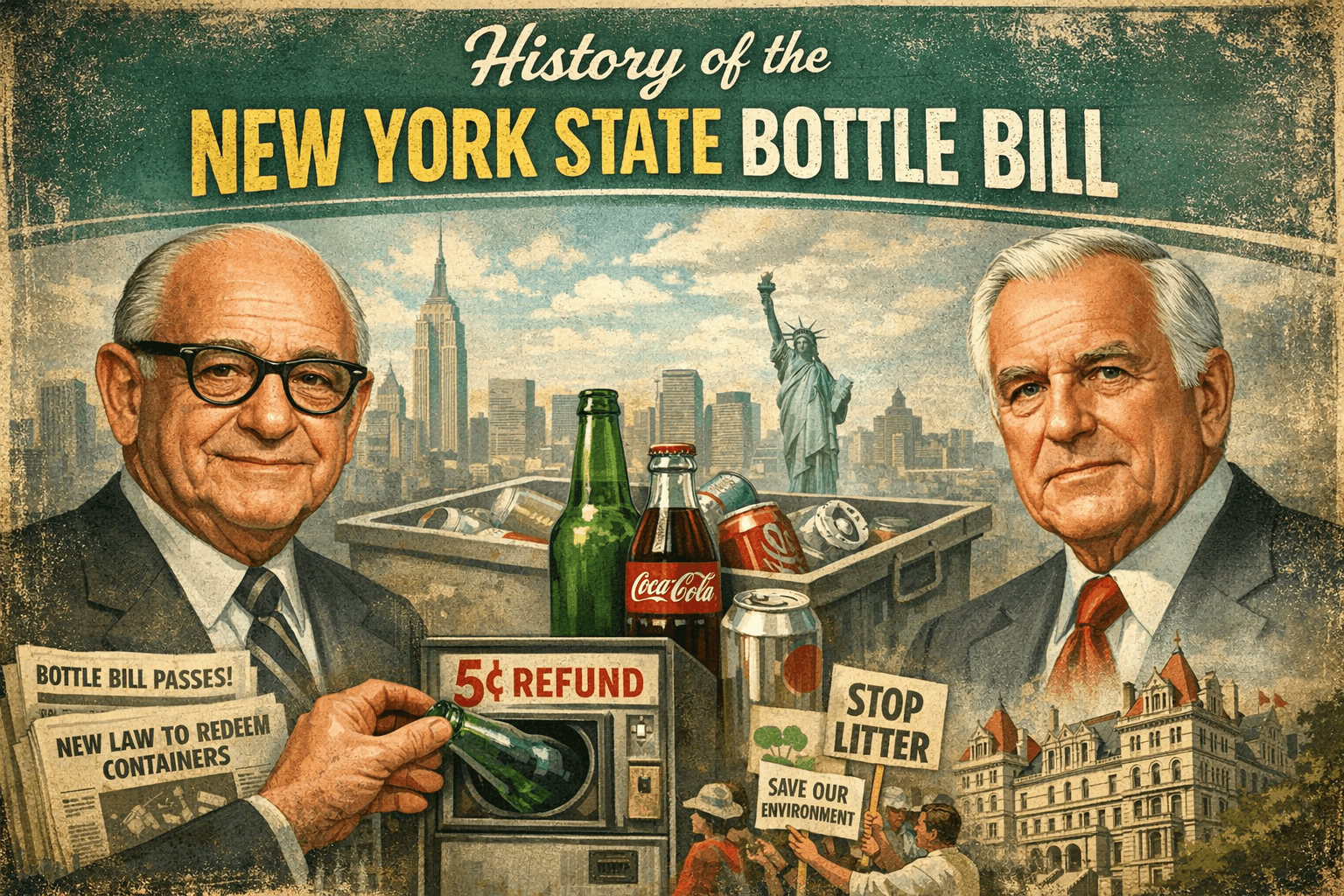
The New York State Returnable Container Act, better known as the New York Bottle Bill, came about in 1982 after more than a decade of debate on how to fix the litter problem in New York.
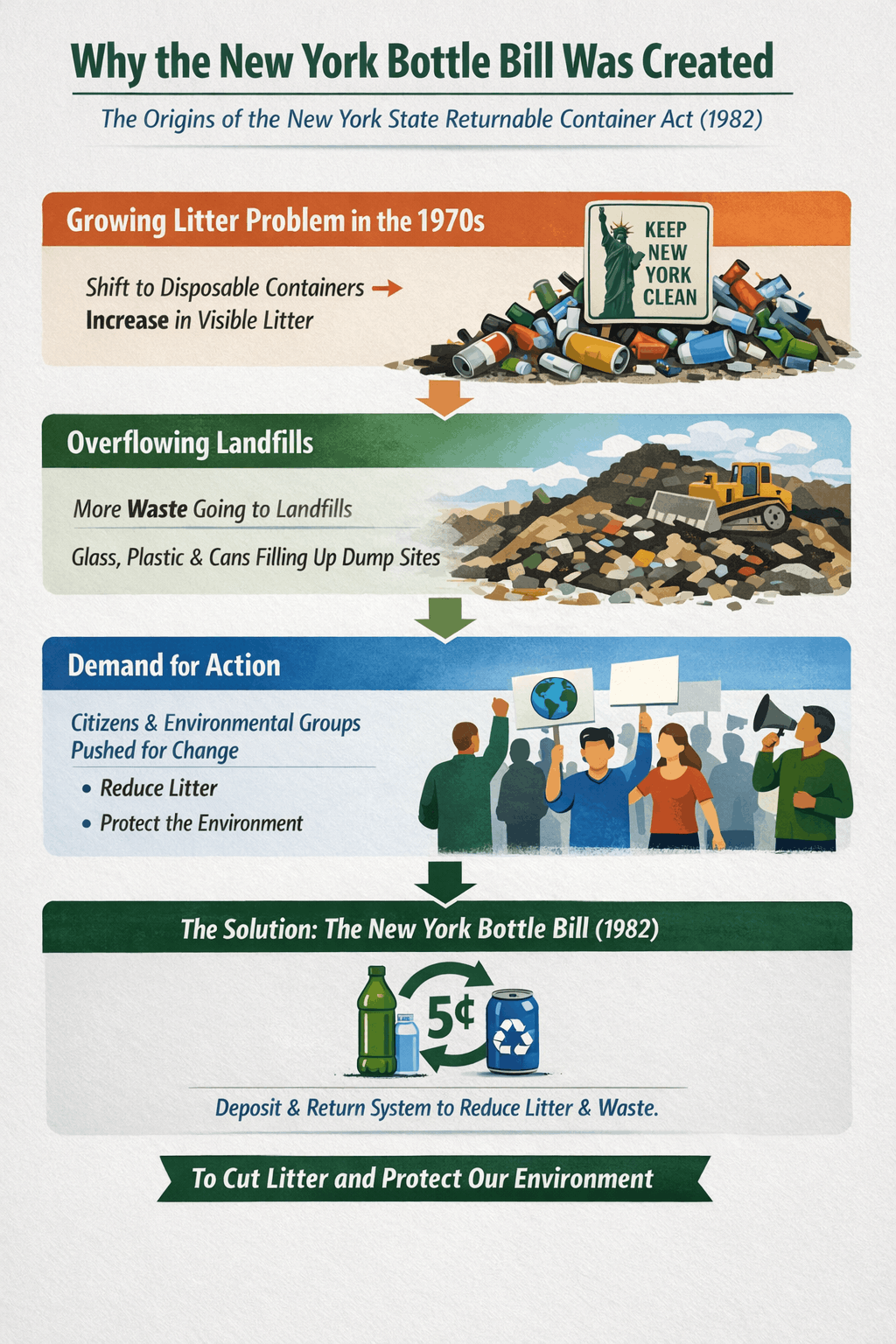
The core issues that lead to its inception were:
- An increase in visible litter due to a shift to non-refillable containers.
- A need to reduce the amount of waste going to landfills due to the industry shift
- Citizen & environmental groups pushing for a solution.
The Litter Crisis of the 1960s and 1970s
To understand why the Bottle Bill became necessary, we have to go back to the 1960s and early 1970s.
At that time, the beverage industry was rapidly shifting from refillable glass bottles to single-use containers, steel cans, aluminum cans, and non-returnable glass. Convenience increased. Waste exploded.
This was largely due to regional bottling practices at the time. There existed roughly 4,500 bottlers at the time and due to market changes and an improved highway system in the US national distribution became much more viable. Coke and Pepsi began to buy up as many distributors as they could, consolidating the market further. As the big bottlers shifted to a cheaper single use bottles and cans strategy, super markets saw the opportunity to push their own brands leading to a large influx of single use bottles and cans across the US.
Roadsides across New York began to be littered with beverage containers. Parks, beaches, and highways were visibly polluted. Municipal waste systems were overwhelmed. Landfills were filling up faster than communities could manage.
The environmental movement was also gaining momentum nationwide. The first Earth Day in 1970 brought public attention to pollution and waste. New Yorkers began to question whether manufacturers should share responsibility for the waste they created.
The problem was no longer cosmetic. It was environmental and economic.
Early Legislative Efforts
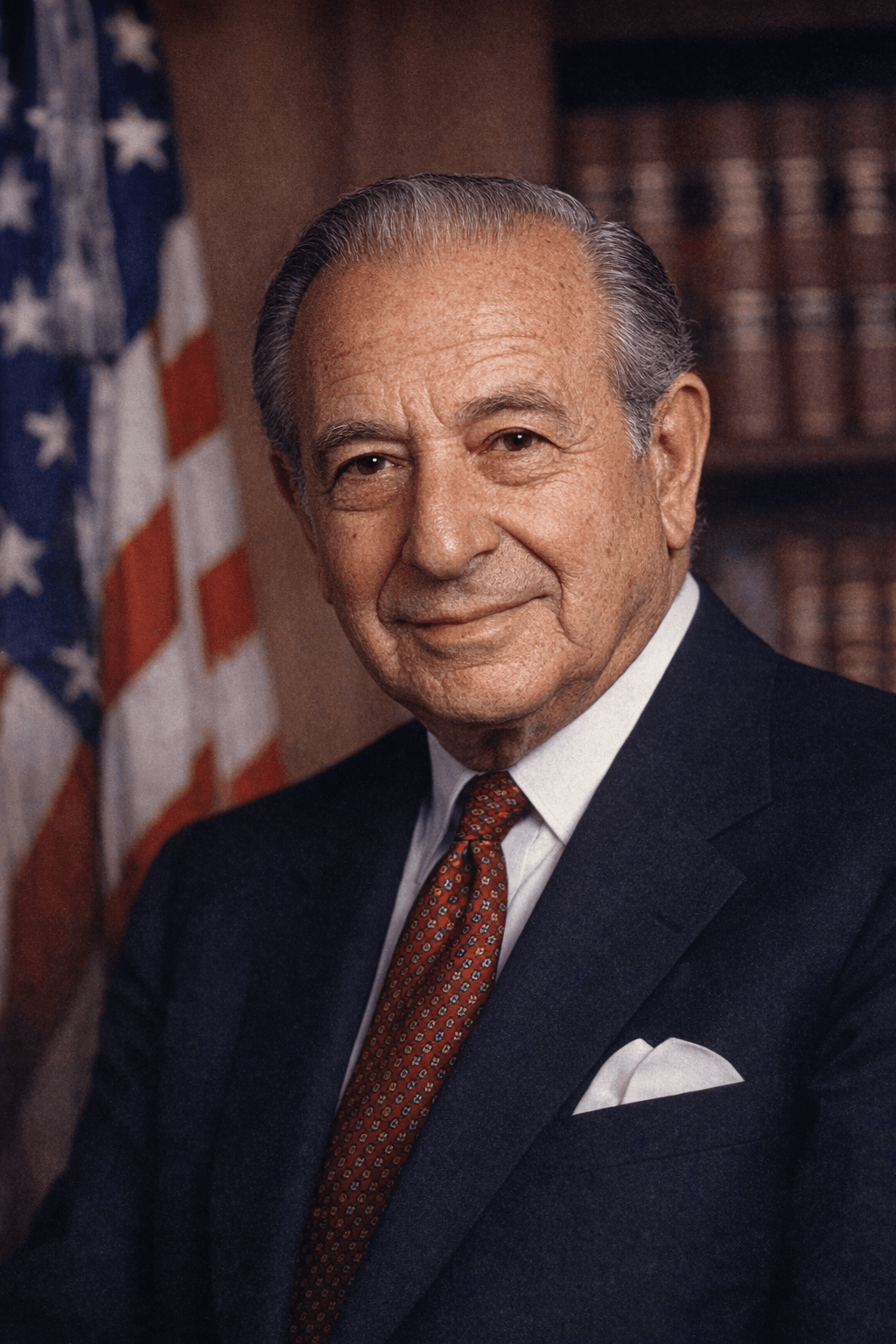
By the early 1970s, lawmakers began proposing ideas to solve this issue and “bottle deposit” legislation was the winning idea. The figure most credited with pushing the idea was Louis J. Lefkowitz, the New York State Attorney General It was simple: place a refundable deposit on beverage containers to encourage returns instead of disposal or litter.
Oregon passed the nation’s first bottle bill in 1971. That success gave momentum to similar proposals in other states, including New York. But, introducing legislation was the easy part. Passing it proved far more difficult…Shocker I know!
Oregon passed the nation’s first bottle bill in 1971. That success gave momentum to similar proposals in other states, including New York. But, introducing legislation was the easy part. Passing it proved far more difficult…Shocker I know!
Industry Opposition and Economic Concerns
One of the most significant obstacles to The New York Bottle Bill was opposition from the beverage and packaging industries.
Manufacturers and distributors argued that a deposit system would:
- Increase operational costs
- Disrupt distribution networks
- Burden retailers with storage and handling requirements
- Lead to higher prices for consumers
Retailers expressed concern about space limitations and sanitation issues. Grocery stores worried about being forced to take back sticky, damaged containers.
The beverage industry also argued that jobs could be lost if bottling and distribution systems had to change.
These economic arguments carried weight. Lawmakers had to consider not only environmental benefits but also potential impacts on businesses and workers.
Political Challenges in Albany
The political landscape in Albany reflected these tensions.
Deposit legislation faced repeated delays and amendments. Lobbyists worked aggressively to block or weaken proposals. Some lawmakers believed anti-litter campaigns and voluntary recycling programs would be sufficient.
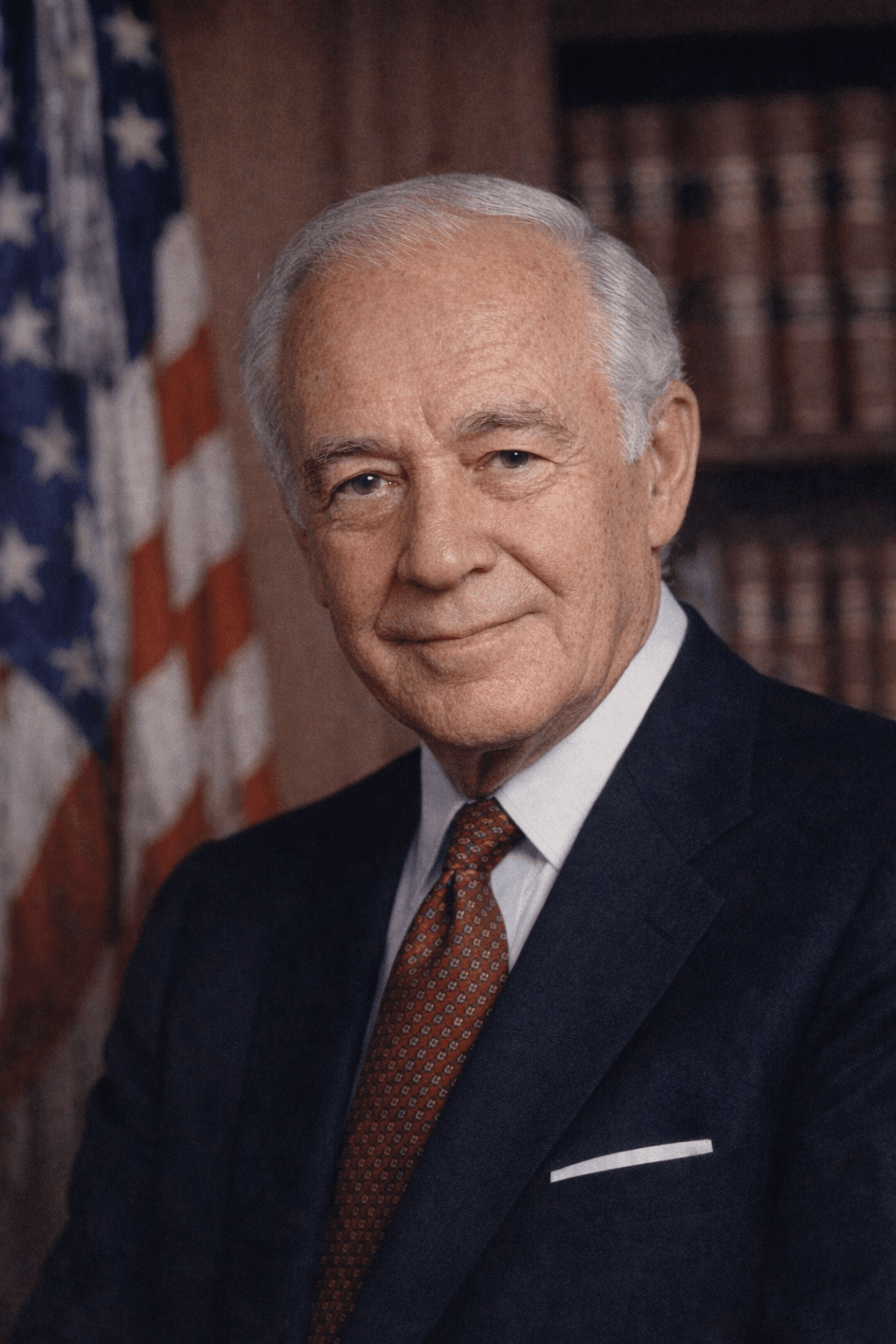
Governor Hugh Carey, who took office in 1975, ultimately played a key role. But before the bill reached his desk, it endured intense debate.
Questions lawmakers wrestled with included:
- Should the deposit be five cents or higher?
- Which beverages should be covered?
- Who should keep unclaimed deposits?
- How should enforcement work?
Compromise became necessary. The final bill did not cover all beverage types, only the most noticeable types seen in common litter and the deposit was set at five cents. A number considered high enough to motivate returns but low enough to ease industry resistance.
Environmental Advocacy and Grassroots Pressure
While industry opposition was strong, environmental advocacy was equally determined.
Citizen groups, environmental organizations, and community leaders pushed lawmakers to act. They argued that voluntary programs were not reducing litter fast enough.
I find it important to remember that this was not just a legislative effort, it was a public movement.
New Yorkers were seeing litter in their neighborhoods every day. That visibility mattered. It turned the issue from abstract policy into lived experience.
Supporters framed the deposit as a matter of responsibility. If a consumer could get money back for returning a container, fewer bottles would end up on highways and in waterways.
That argument resonated with many residents.
The Passage of the Law in 1982
After years of debate, the New York State Returnable Container Act was signed into law in 1982.
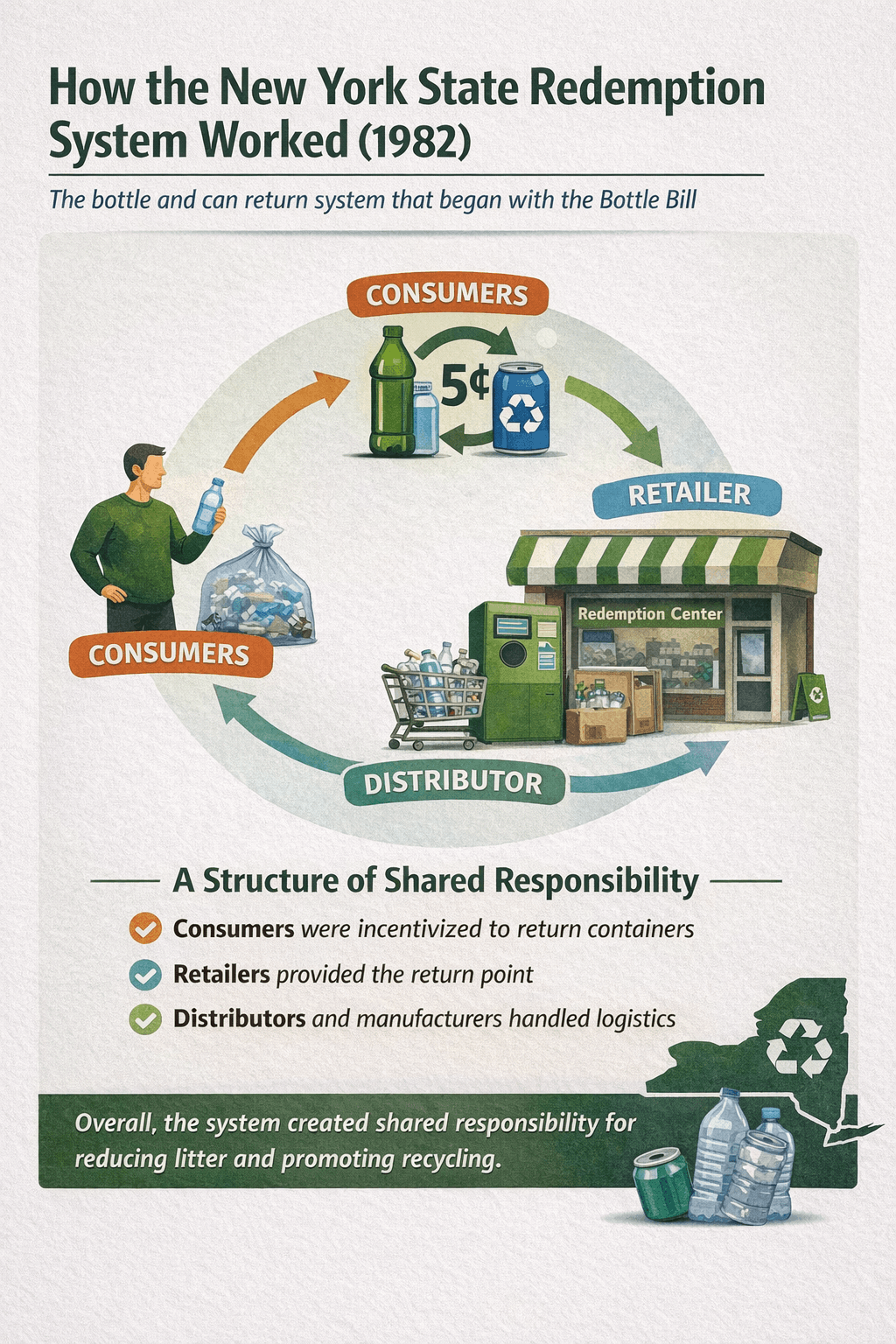
The law required a minimum five-cent deposit on most carbonated beverage containers sold in New York State. Consumers would pay the deposit at purchase and receive it back upon return.
Retailers were required to accept returns of containers they sold. Distributors were responsible for collecting containers and managing deposits.
The structure created shared responsibility:
- Consumers were incentivized to return containers.
- Retailers provided the return point.
- Distributors and manufacturers handled logistics.
It was not a simple system, but it was intentional.
Public Opinion at the Time of Passage
Public opinion during the final stages of debate was mixed, but increasingly supportive.
Many residents favored the environmental benefits. Polling and public commentary at the time showed growing frustration with roadside litter. The deposit was widely seen as a practical solution.
At the same time, there were concerns.
Some consumers disliked paying a deposit upfront, even though it was refundable. Others questioned whether stores would be inconvenienced. Small retailers, in particular, worried about operational strain.
Still, environmental messaging was powerful. The connection between deposits and cleaner communities was easy to understand.
By the time the bill passed, a significant portion of the public viewed it as a necessary step.
Immediate Impact After Implementation
After implementation, the results were noticeable.
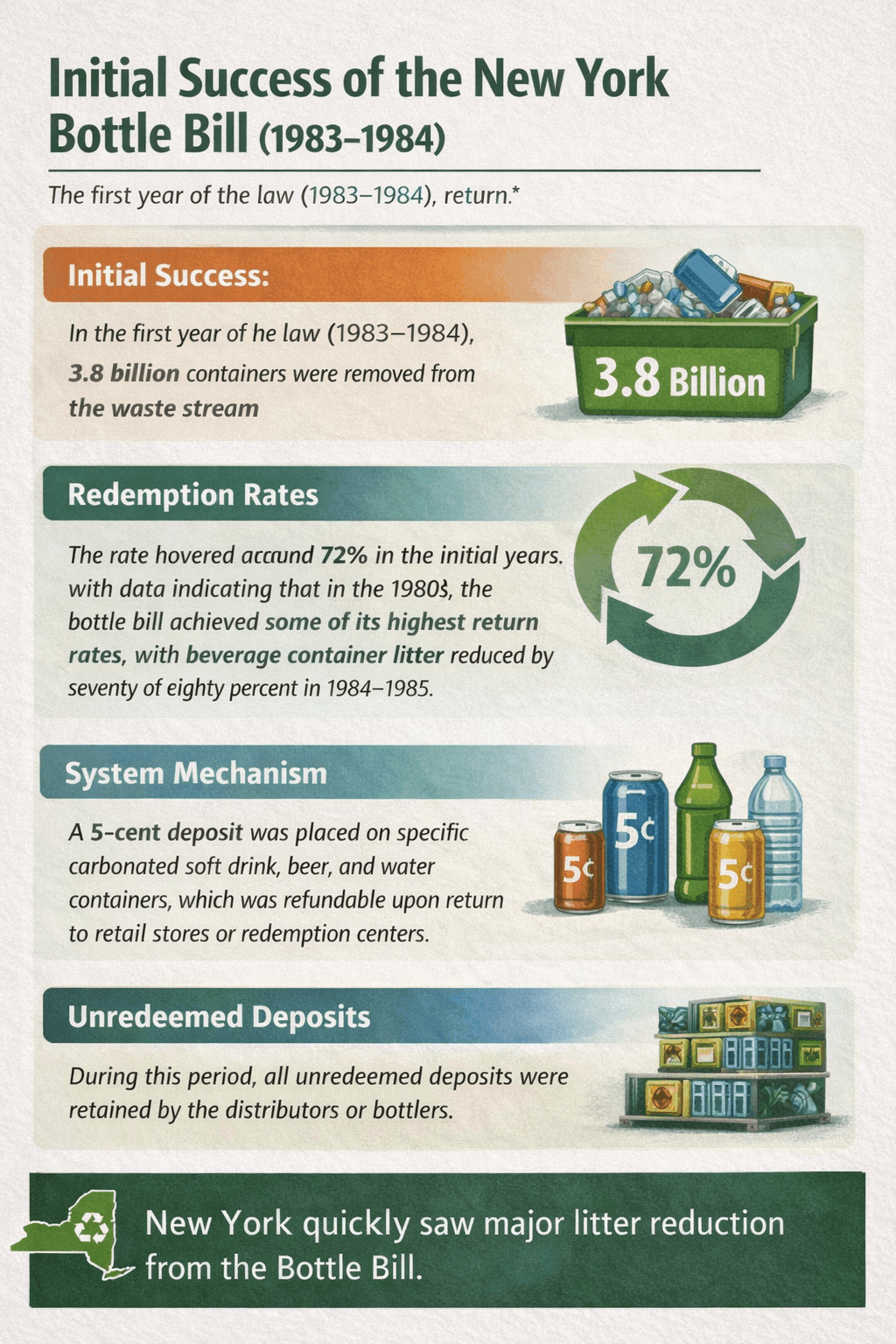
Litter from beverage containers declined significantly. Redemption rates, meaning the percentage of containers returned, rose quickly. The deposit created a clear financial incentive.
An unexpected social benefit also emerged.
Individuals and community groups began collecting discarded containers to redeem deposits. For some low-income New Yorkers, this became a modest but meaningful source of income.
The law did more than reduce waste. It created a small, informal economic ecosystem around container recovery.
Over time, public resistance softened. As residents adjusted to the deposit system, it became normalized. What once seemed like a burden became routine.
Ongoing Debate and Expansion
The story does not end in 1982.
Over the decades, lawmakers have debated expanding and modernizing the Bottle Bill. In 2009, New York expanded the law to include bottled water and addressed the issue of unclaimed deposits.
These updates reflect a broader truth: environmental policy evolves with consumption patterns.
As beverage markets changed, the law had to adapt.
The fact that the Bottle Bill has endured for more than four decades speaks to its foundational strength.
Economic Realities and System Complexity
While the environmental impact has been widely recognized, the Bottle Bill has always involved economic complexity.
Handling fees for retailers, redemption infrastructure, distributor logistics, and unclaimed deposit management remain areas of discussion.
Businesses continue to debate cost burdens. Lawmakers continue to review system efficiency.
Yet the core principle, that a small refundable deposit reduces waste, has remained intact.
How Public Opinion Shifted Over Time
Looking back at The History of The New York Bottle Bill, I see a clear shift in public perception.
At first, it was controversial. People questioned its practicality and fairness.
Over time, it became part of daily life.
Younger generations have grown up with deposits as the norm. For many residents today, the idea of not having a deposit system seems unusual.
Public support tends to increase when environmental benefits are visible. Cleaner roadsides reinforce the value of the policy.
What once required intense political negotiation is now widely accepted as common sense.
About the author

Jack Flechaus
Head of Marketing & Events
Jack Flechaus hold a bachelors degree in business administration & marketing from the State University of New York at Fredonia.
Jack began his career with Upstate Bottle Return in 2019, building his foundation in the resale and processing of bottles and cans within the redemption business. Starting on the operational side of the business gave him firsthand insight into the systems, logistics, and customer relationships that drive the company’s success.
As his role expanded, Jack took on responsibility for payments and fundraising initiatives, helping streamline financial processes while strengthening community partnerships. His ability to bridge operations with outreach positioned him as a natural leader within the organization.
Today, Jack serves as Head of Marketing, where he leads brand strategy, customer engagement, and growth initiatives for Upstate Bottle Return. Drawing on his operational roots and financial experience, he brings a practical, results-driven approach to marketing, focused on expanding community impact, increasing customer participation, and reinforcing the company’s mission of sustainability and service.