How Do Redemption Centers Make Money?
The most common frequently asked question we get at Upstate Bottle Return is how we make money when all we do is give you your deposit back?
The short answer:
- Redemption centers get a handling fee, from an intermediary, on top of the deposit we reimbursed you when we resell the returns to an intermediary.
- Some centers also sell beverages, propane and/or other merchandise.
Redemption centers do not make any money off of the customers who sell them bottles and cans, unless they choose to purchase other goods offered.
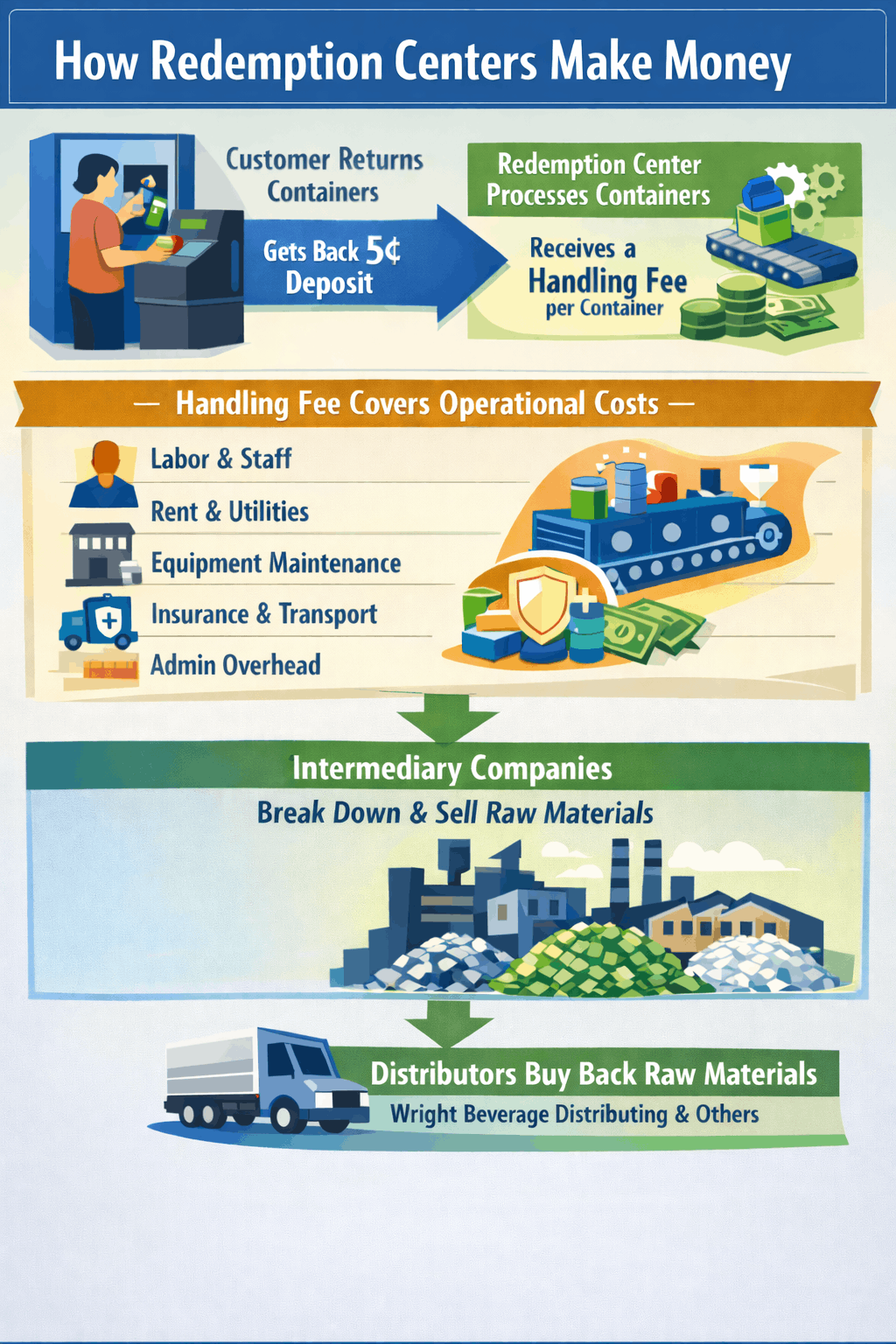
When a customer returns an eligible beverage container, the state requires that we refund the container’s 5 cent deposit. At the same time, New York’s law allows a handling fee to be paid to the redemption center for processing that container. That handling fee is intended to cover the operational costs of acceptance: labor to run the center, utilities, store rent or lease, maintenance of equipment (like conveyors and reverse vending machines), insurance, transportation, and administrative overhead.
Who Pays Redemption Centers?
The handling fee is ultimately covered by distributors such as Wright Beverage Distributing, who eventually buy back the material from whichever intermediary we sell it to. The intermediary breaks down the returns into their raw materials. They then sell the raw materials back to the distributors for a profit. Occasionally, depending on local laws and agreements, distributors buy back the bottles and cans directly from the redemption centers.
The deposits we are reimbursed are reserved for purchasing more bottles and cans; and the handling fee is our compensation for taking and processing the container and getting it ready for breakdown. A redemption center can just separate the returns into general plastic and aluminum but the handling fee is substantially lower and is not enough to cover operating costs.
This option is often used by sellers of beverages where bottle deposits are not their main source of income such as gas stations. Any sellers of beverages are required by the bottle bill to reimburse their deposits sold; and thus smaller dealers are just looking to recoup the cost of their paid out deposits.
What Receiving The Full Handling Fee Requires
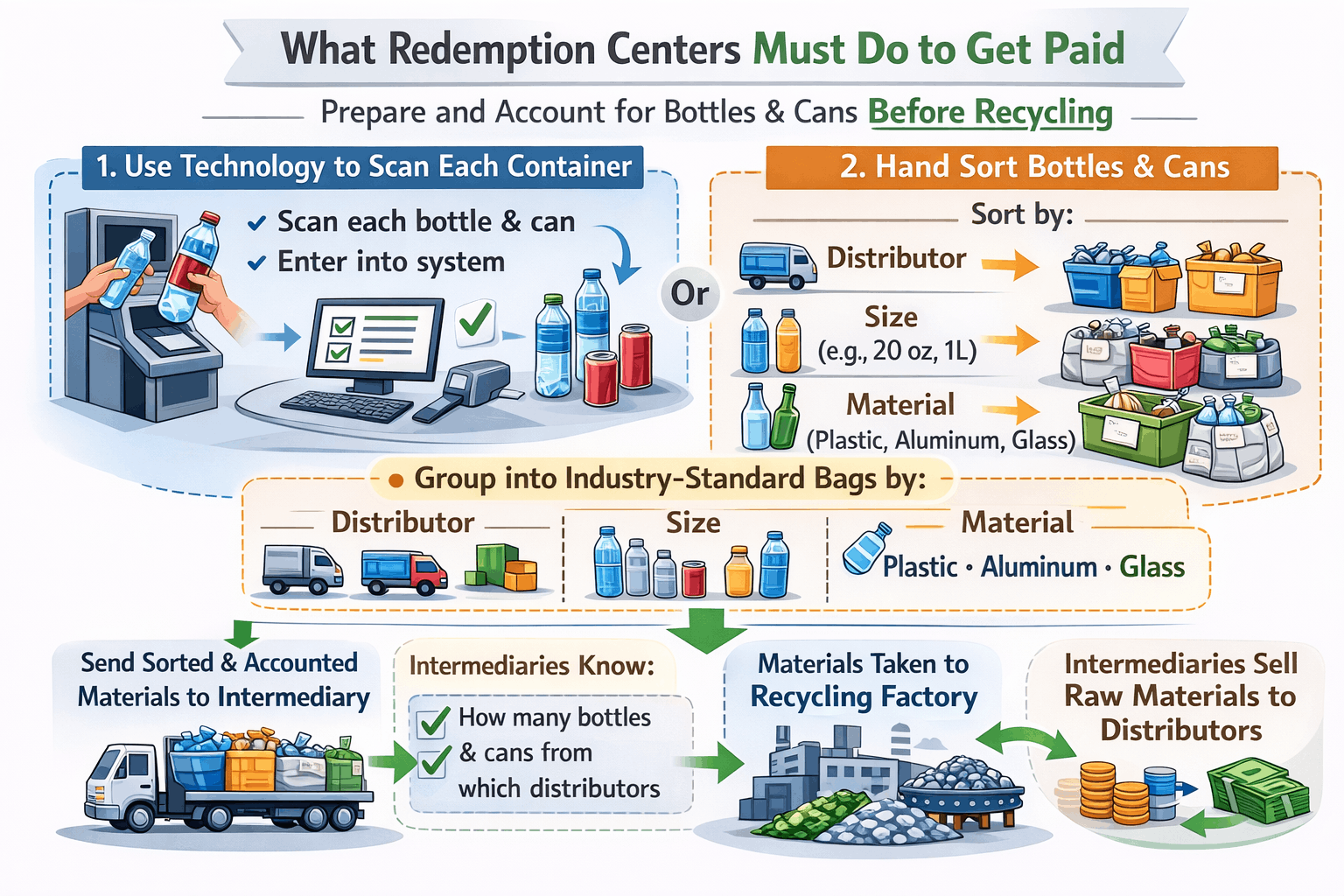
To receive the handling fee, redemption centers must prepare the recycling to be accounted for and put through the recycling process at the factory. The intermediaries need to know how many bottles and cans need to be attributed to which distributors before they break the material down for resale.
There are two main ways that this is accomplished:
- Using technology to scan each container into the system.
- Hand sorting bottles and cans into industry standard sized bags by distributor, size and material.
Technology
Some centers use large reverse vending machines (RVMs) that scan each container’s barcode or read a machine-readable label. The RVM records type, quantity, and material. The machine sends a computer readout that the intermediary uses to reconcile returns and pay the handling fee from the state program. When RVMs are used, payment for handling fees is tied to the machine’s electronic tally.
After the recycling is scanned in, it automatically separated into plastic and aluminum, crushed into large bins, loaded onto a truck. Once back at the factory, the material is dumped out onto a line and melted down.
Hand Sorting
In centers without full automation, staff hand-separate containers by distributor (brand), size (e.g., 12 oz, 16 oz), and material (glass, aluminum, PET plastic). We sort into industry-standard bags. Because many recyclers and brokers buy by standardized volumes, we sell based on the average number of units that typically fit in those bags.
This way is obviously less efficient and accurate, but using technology has an extremely high upfront cost to set up. Thus, hand counting is the most common way you will come across in New York State.
In short, our business model depends on three linked elements: issuing the deposit refund to customers, collecting the state-authorized handling fee to cover processing costs, and selling the accumulated, sorted materials to intermediaries who aggregate and resell to distributors and manufacturers. That combined flow of funds is how redemption centers like mine stay open and continue to serve New Yorkers.
About the author

Jack Flechaus
Head of Marketing & Events
Jack Flechaus hold a bachelors degree in business administration & marketing from the State University of New York at Fredonia.
Jack began his career with Upstate Bottle Return in 2019, building his foundation in the resale and processing of bottles and cans within the redemption business. Starting on the operational side of the business gave him firsthand insight into the systems, logistics, and customer relationships that drive the company’s success.
As his role expanded, Jack took on responsibility for payments and fundraising initiatives, helping streamline financial processes while strengthening community partnerships. His ability to bridge operations with outreach positioned him as a natural leader within the organization.
Today, Jack serves as Head of Marketing, where he leads brand strategy, customer engagement, and growth initiatives for Upstate Bottle Return. Drawing on his operational roots and financial experience, he brings a practical, results-driven approach to marketing, focused on expanding community impact, increasing customer participation, and reinforcing the company’s mission of sustainability and service.