What are Reverse Vending Machines?
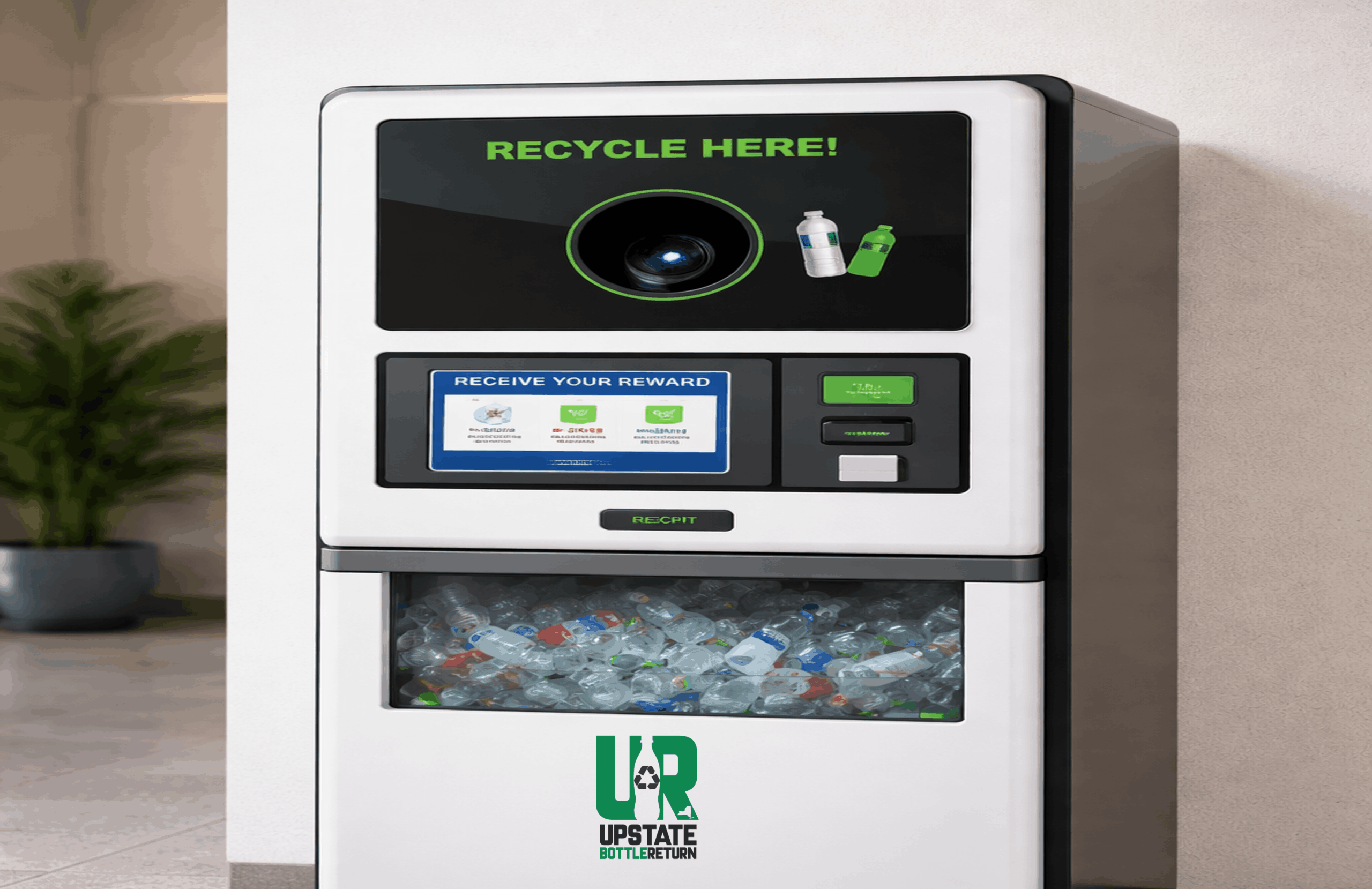
Reverse Vending Machines aka RVM’s are essentially a recycling robot designed for depositable returns. RVMs give residents a quick, contactless way to return containers and reclaim their deposit without the need for constant staff.
An RVM is an automated kiosk that:
- Accepts empty beverage containers
- Reads their barcode or shape
- Verifies eligibility under New York’s Container Deposit Law
- Issues a credit, voucher, or receipt for the 5-cent deposit.
RVM’s are typically used by grocery stores or other businesses that have to steward deposits of the containers they sell. They are most often seen in businesses where collecting deposits is not their main source of income, like businesses such as redemption centers.
How The Technology Works
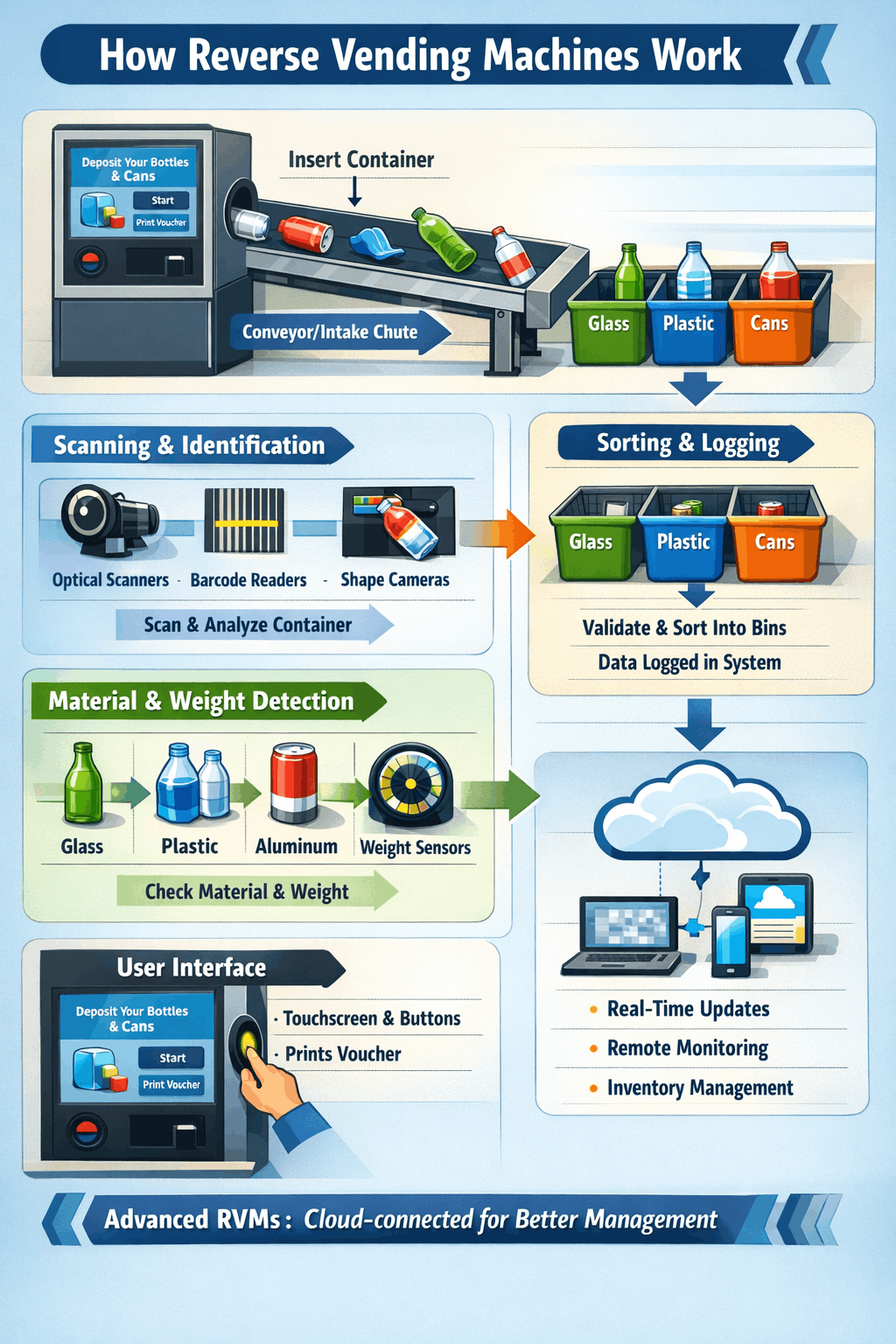
We rely on the same core technologies you’ll find in most RVMs. A conveyor or intake chute guides containers into the machine. Optical scanners, barcode readers, and shape-recognition cameras check the container’s label or morphology against a database of eligible products. Weight sensors and material detectors confirm whether an item is glass, aluminum, or plastic.
If the container matches the state’s criteria, software logs the return and actuators direct the item into the appropriate internal bin.
Machines also include a user interface, touchscreen or buttons, that walks customers through the process and prints vouchers. Advanced RVMs connect to the cloud for real-time updates, inventory alerts, and remote diagnostics. That connectivity helps operators manage maintenance, empty bins before overflow, and push software updates to improve recognition rates.
Where RVMs Are Typically Found
In New York State, you’ll most often see RVMs in high-traffic, convenient locations. We place and interact with machines in supermarkets, convenience stores, transit hubs, and large retail chains. Municipal collection sites and some campus or workplace recycling centers also host RVMs.
In urban areas like New York City, machines concentrate near grocery stores and subway-adjacent retail; in suburbs, you’ll see them at big-box stores and community redemption centers. New York’s mixed approach includes both standalone RVM installations and hybrid locations that provide staff-assisted service alongside machines.

Advantages Of Using RVMs vs. A Redemption Center
- RVMs operate outside business hours in many locations.
- For small loads, this is often the fastest route to reclaim your deposit.
- Contactless handling: For people who prefer minimal interaction, RVMs reduce touchpoints and staff dependence.
- Automated sorting: RVMs separate materials reliably, which helps maintain recycling stream purity before containers reach processors.
- Lower staffing needs: For operators like us, RVMs lower labor demands at peak times and reduce queues.
- Record keeping and digital integration: Many RVMs offer electronic vouchers or loyalty integration, making it easier to track returns and apply credits to store accounts.
Disadvantages Of Using RVMs vs. A Redemption Center
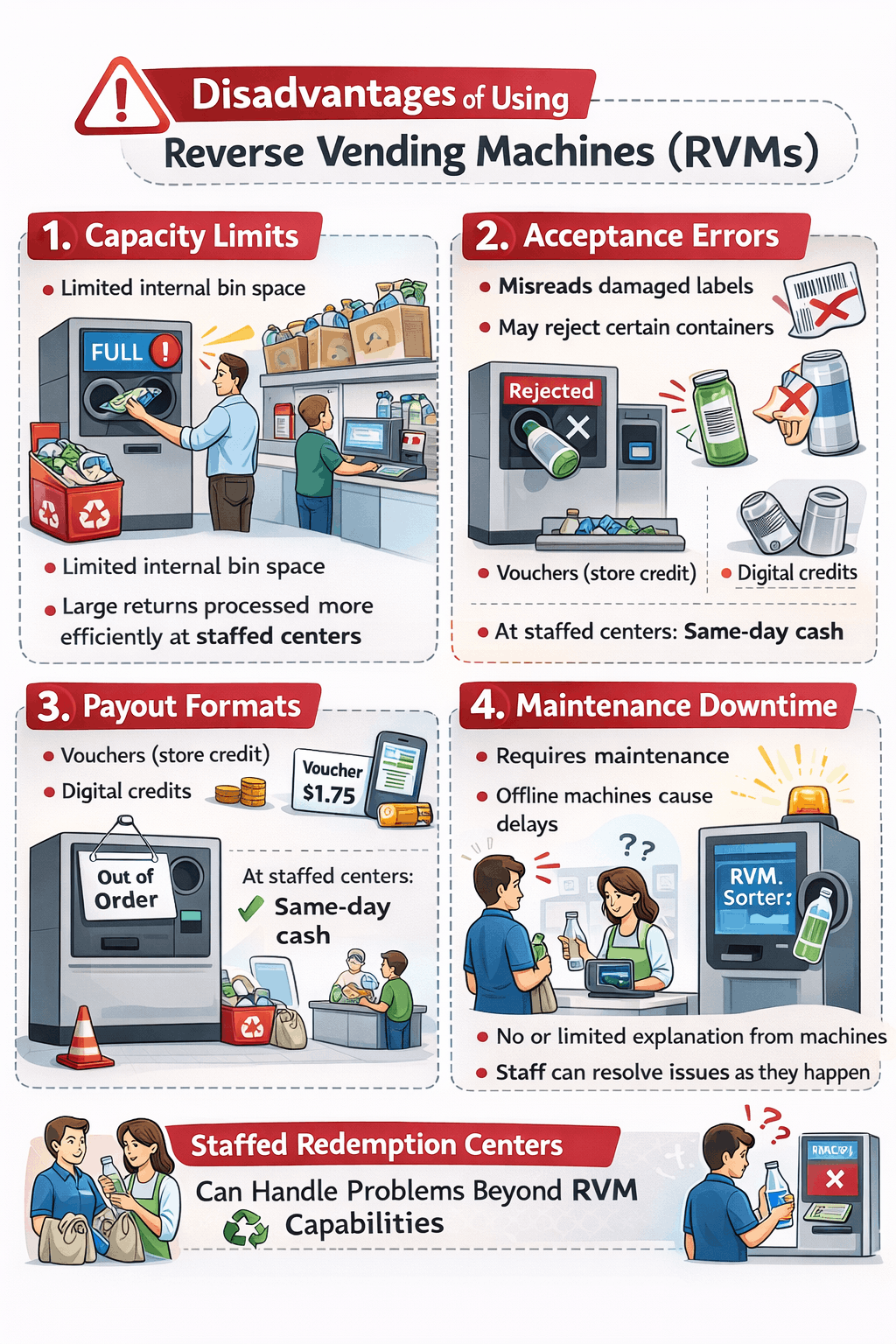
- Capacity limits: RVMs have finite internal bin space. For very large returns—multiple grocery bags or boxes—we encourage customers to come to our redemption center where staff can process high-volume loads more efficiently.
- Acceptance errors: No scanner is perfect. Machines sometimes misread barcodes on damaged labels or fail to accept certain legacy containers that a trained clerk would recognize and process manually.
- Payout formats: Some RVMs issue vouchers redeemable only at the host store, or provide digital credits instead of immediate cash. At our center, we can offer same-day cash for returns.
- Maintenance downtime: Machines require maintenance and occasional repairs. When an RVM is offline, customers must either wait or visit staffed locations.
- Limited customer service: If an item is rejected, an RVM can’t always explain why. Our staff can inspect problematic containers and resolve issues on the spot.
How To Choose Between A RVM And A Bottle Return
If you have a small to moderate number of containers and value speed, use an RVM. Look for machines that print vouchers redeemable at your preferred store or provide digital codes you can cash at a nearby redemption center.
If you’re returning a large load, have mixed container types, need immediate cash, or want help with damaged containers, come to our redemption center. We can handle bulk returns, offer same-day payment, and advise on what is or isn’t eligible under New York law.
We encourage all New Yorkers to take advantage of the 5-cent deposit, whether through RVMs or redemption centers, because it reduces litter and funds local recycling infrastructure. Use RVMs for speed and convenience; bring larger or complicated returns to a staffed redemption center like ours for full service and immediate payment. Together, these options make it easy for residents to get their deposit money back and keep our communities cleaner.
About the author
Jack Flechaus
Head of Marketing & Events
Jack Flechaus hold a bachelors degree in business administration & marketing from the State University of New York at Fredonia.
Jack began his career with Upstate Bottle Return in 2019, building his foundation in the resale and processing of bottles and cans within the redemption business. Starting on the operational side of the business gave him firsthand insight into the systems, logistics, and customer relationships that drive the company’s success.
As his role expanded, Jack took on responsibility for payments and fundraising initiatives, helping streamline financial processes while strengthening community partnerships. His ability to bridge operations with outreach positioned him as a natural leader within the organization.
Today, Jack serves as Head of Marketing, where he leads brand strategy, customer engagement, and growth initiatives for Upstate Bottle Return. Drawing on his operational roots and financial experience, he brings a practical, results-driven approach to marketing, focused on expanding community impact, increasing customer participation, and reinforcing the company’s mission of sustainability and service.